Shadows & Illuminations
Memory of My Face
Ritual Burdens
The Bird Dancer
Family Victim
Kites & Monsters
"As the culmination of over a decade of close and continuing interaction with Robert Lemelson's informants, the 'Afflictions: Culture & Mental Illness in Indonesia' film series, shows cultural and visual anthropology at their best."
-Karen Nakamura, Yale University, American Anthropology, Volume 113, No.4, December 2011
DOWNLOAD THE STUDY GUIDES
BD-STUDY GUIDE.pdf
MF-STUDY GUIDE.pdf
FV-STUDY GUIDE.pdf
SI-STUDY GUIDE.pdf
RECENT SCREENINGS
Cal State University, Long Beach Academic Screenings. CSULB Hall of Sciences, Room 102. Long Beach, California. Volume 1: November 1, 2011, 7-9:30pm. Volume 2: November 2, 2011, 7-9:30pm
NOV 1
-2, 2011
Afflictions: Culture and Mental Illness in Indonesia is a 6-part series of ethnographic films on severe mental illness in Indonesia, based on material drawn from 12 years of person-centered research by writer/anthropologist Robert Lemelson. The series, which follows 6 individuals of different ages and backgrounds, explores the relationship between culture, mental illness, and first-person experience.
Volume 1: Psychotic Disorders
Volume 2: Neuropsychiatric Disorders
RECENT FESTIVALS
Jean Rouch International Ethngraphic Film Festival. Screening of Shadows & Illuminations on Monday, November 7, 2011 at 8:30pm at the House of World Cultures , Theatre of the French Alliance, 101 Boulevard Raspail, 75006 Paris.The Director will be in attendance.
NOV 7- 12, 2011
AWARD & NOMINATIONS
Nominee, Best Limited Series, IDA Awards, 2010
Winner, Award of Merit, 2011 Indie Fest Award, 2011
Winner, Golden Eagle Award, Spring 2011 Cine Awards, 2011
Afflictions: Culture and Mental Illness in Indonesia is a six part series, shot over the course of 12 years in Bali and Java, Indonesia, as a result of longitudinal ethnographic fieldwork conducted by psychological anthropologist Robert Lemelson, exploring the relationship between culture, mental illness and personal experience. Through a series of person-centered case studies, Afflictions seeks to address a series of questions about mental illness, difference, and deviance.
VOLUME 1 : PSYCHOTIC DISORDERS
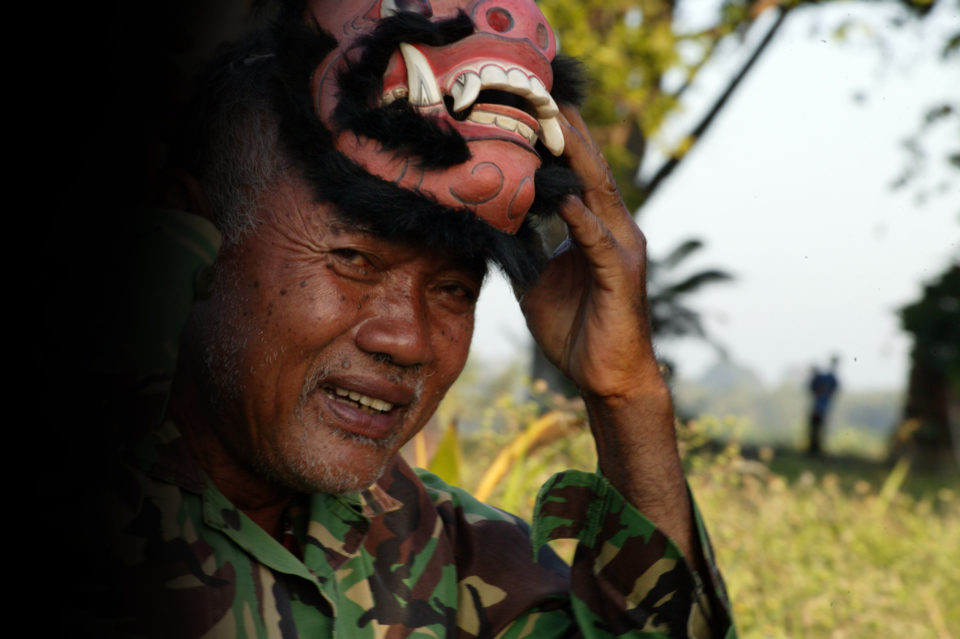
Shadows & Illuminations follows an older Balinese man, Nyoman Kereta, as he struggles with the intrusion into his consciousness of spirits. The role of violence and loss, his interactions with healers, and what role a psychiatric diagnosis of schizophrenia entails are explored. 35 minutes
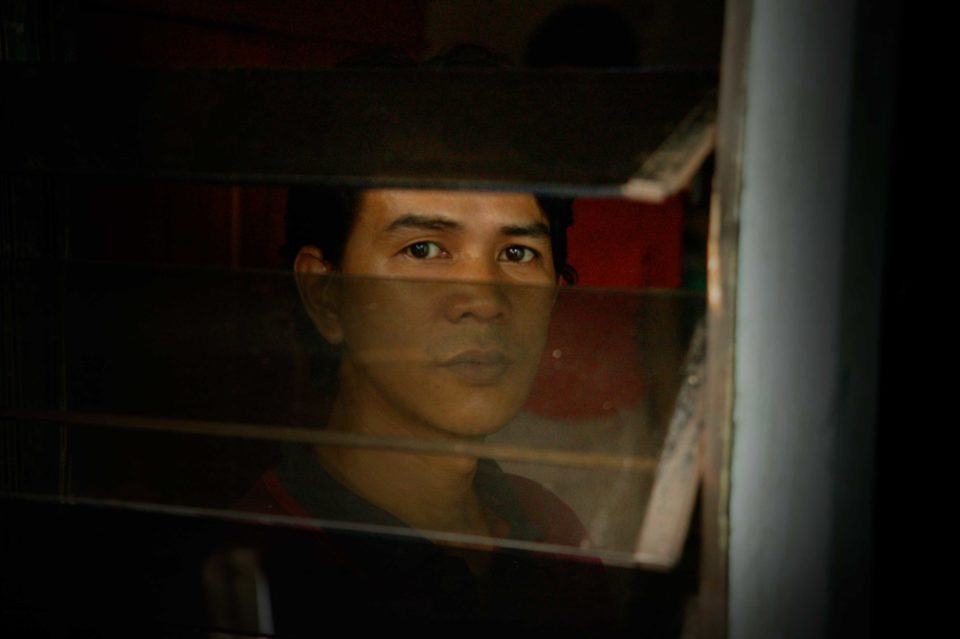
Memory of My Face follows Bambang Rujito, a university-educated Indonesian man in his late thirties diagnosed with schizoaffective disorder. The film illustrates how the residues of colonialism and the pervasive influence of globalization affect the subjective experience of mental illness. 22 minutes
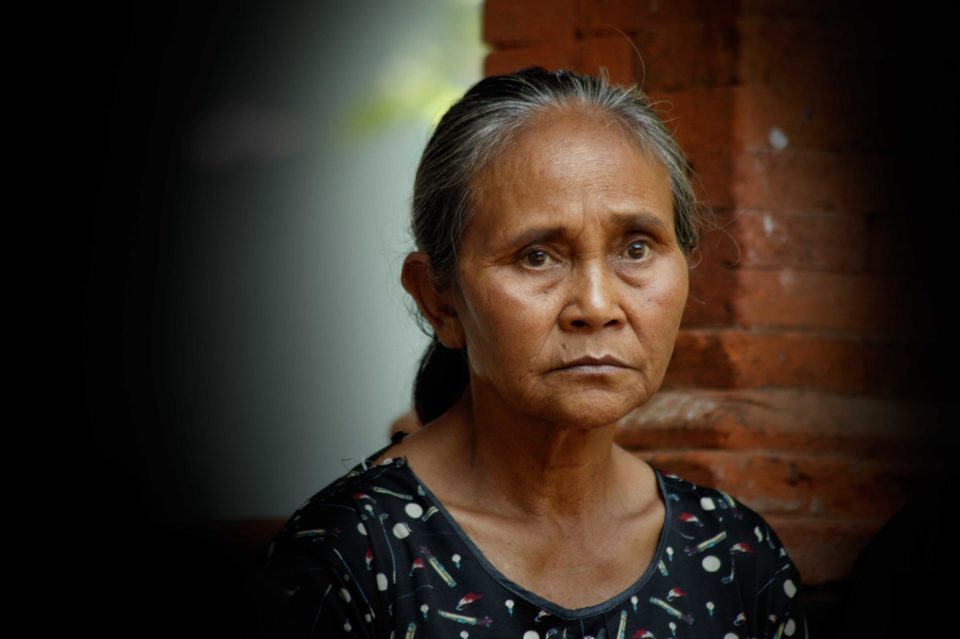
Ritual Burdens follows Ni Ketut Kasih, an elderly widow, who has lived her whole life in a small village in Central Bali surrounded by the complex rhythms of the Balinese ritual calendar. The film questions how communal spiritual obligations may be folded into personal schemas of stress to trigger episodes of mental illness. 25 minutes
VOLUME 2 : NEUROPSYCHIATRIC DISORDERS
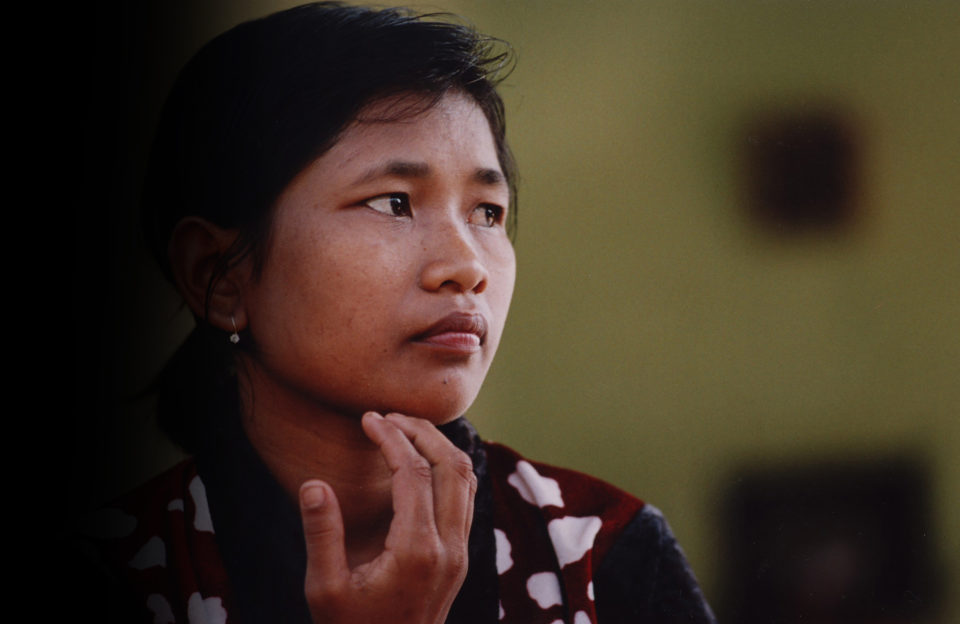
The Bird Dancer follows the life of Gusti Ayu Suartini, a young Balinese woman with Tourettes Syndrome, as she struggles to create an life for herself while coping with a society which doesn't understand her disease, healers and doctors who cant help her, and a family that rejects her. 40 minutes
Family Victim f ollows Estu Wardhani, a young Javanese man, diagnosed with anti-social personality disorder, whose many deviant acts disrupts his family and leaves him feeling disrespected by them. The film explores how families manage troubled and troublesome members in the context of a small scale, rural society. 38 minutes
Kites and Monsters follows Wayan Yoga, a young Balinese from boyhood to manhood, discovering the influential and protective aspects of culture that may guide developmental neuropsychiatric processes. 22 minutes
In 1997 I was a Fulbright scholar in Indonesia, studying this question and the more general question of the relation of culture to mental illness. I met many people during the two years living in Indonesia, some of whom I formed long-term friendships with. As a psychological anthropologist I was interested not just in their diagnosis, illness and treatment, but also how they were viewed and understood by their family and community, how they viewed themselves in relationship to their illness and associated troubles, and most importantly what were the things that were most important and valuable to them. In the subsequent years I returned to Indonesia many times, filming their lives, with its struggles and defeats, and moments of happiness and transcendence.
One project in this decades long filming is the Affliction series . In this, the first series on the lives of the mentally ill in the developing world (or less medicalized, those with troubled and disturbed lives) three of these people are introduced. The illnesses they suffer from (schizophrenia, tourettes syndrome, and arguably anti-social personality disorder) are presented through the course of the films, but it is not the illnesses per se that are what is necessarily troubling them. It is the response to them by their families and communities, and their struggles to forge selves and identities that they believe are valued and valuable, that most centrally concern them. These films do not privilege their psychiatric diagnoses as the central or overriding concern in their lives. Indeed, psychiatric understandings and frameworks are only one of a number of ways in which the films explore their lives.
For me, as an anthropologist, it was extremely important to explore their lives, as they understood them, and to focus on the issues and understandings that were salient and relevant to them. Indeed, it is only through taking their life priorities, over riding concerns, and complex understandings of their selves in relation to their social worlds, that we can begin to understand their lives, and secondarily, how their illnesses effect and distort these lives.
150 million people suffer from different types of mental illness in the developing world. In many countries psychiatric treatment is limited or non-existent. Given this, one would suppose that recovery and outcome for severe mental illnesses such as schizophrenia would be much poorer in the developing world. Yet the World Health Organization, in a decades long research project, found that people who were mentally ill actually fared better than those in the developed world. On a population level people returned to work and home more quickly, were less frequently hospitalized, and had less severe symptoms overall.
2010 Society for Visual Anthropology Media Festival
139th American Anthropological Association Mtg
New Orleans, LA
Screening of Shadows & Illuminations, The Bird Dancer and Family Victim
UCLA Academic Viewing
"Shadows & Illuminations"
Haines Hall, Reading Room 352
12pm-1pm
NOV 17-
21, 2010
OCT 5
2010
"The Bird Dancer"
Haines Hall, Room 352, 12pm-1:30pm
JAN 11
2011
7th Annual 2011 Globians Wolrd + Culture Documentary Film Festival. Berlin, Germany.
Screening of Shadows & Illuminations, The Bird Dancer, and Family Victim
AUG 11-
17, 2011
"Family Victim"
JAN 18
8th Annual 2011 Taiwan International Ethnographic Film Festival. Taipei, Taiwan.
Screening of Shadows &Illuminations,The Bird Dancer, and Family Victim.
OCT 7-
11, 2011
Society for Psychological Anthropology Meeting
Santa Monica
MAR 31
2011 Jean Rouch International Ethnographic Film Festival
Paris, France
Screening of Shadows & Illuminations
NOV 7-
12, 2011
Global Mental Health Research Workshop
McGill
MAY 31
Society for the Study of Psychiatry and Culture
Annual Meeting, Seattle
JUN 2
World Psychiatric Association Thematic Conference Istanbul, Turkey
JUN 9-12
American Academy of Child & Adolescent Psychiatry Annual Conference. Toronto, Ontario. Screening of Kites & Monsters and The Bird Dancer and discussion. Fri, Oct 21, 1:30pm.-3:30pm Media Theatre 10.
OCT 18-23, 2011
CSULB Academic Screenings. November 1, Volume 1: Psychotic Disorders. November 2, Volume 2: Neuropsychiatric Disorders. 7pm-9:30pm both nights. CSULB Hall of Sciences, Room 102. No RSVP required
NOV 1-
2, 2011
Robert Lemelson, Ph.D.
Robert Lemelson is an anthropologist and documentary filmmaker whose work focuses on the relationship of culture, psychology and personal experience in Indonesia. He received his M.A. from the University of Chicago and Ph.D. from the Department of Anthropology at the University of California, Los Angeles. He was a Fullbright scholar in Indonesia, exploring the relation of culture to mental illness, and has worked for the World Health Organization. Lemelson's area of specialty is Southeast-Asian studies, psychological anthropology and transcultural psychiatry. He is currently an adjunct professor of Anthropology at UCLA and a research anthropologist in the Semel Institute of Neuroscience at UCLA.
Lemelson is currently working on a number of documentary films based on his research in Indonesia. He has been filming on the islands of Bali and Java in Indonesia since 1997, exploring the relation to culture to such disorders as schizophrenia, obsessive-compulsive disorder, Tourette's syndrome and post traumatic stress disorder (PTSD). Lemelson founded Elemental Productions in 2007 and as Director & Producer has produced documentary films focusing on the relationship of culture, mental illness and personal experience in Indonesia and the United States.
Dag Yngvesson
Dag made his first films while studying film and anthropology as an undergraduate at Pitzer and Hampshire colleges ; fluent in Swedish as well as Russian, he produced, directed and edited "The Kaos Company," a 1 hr documentary on squatters in Gothenburg, Sweden, as well as "Making Skateboards in New Russia," a short subject documentary on skateboarder/entrepreneurs after the fall of communism in St. Petersburg (both 1992). In 2000 Dag finished "Rated X; A Journey Through Porn," a feature length documentary on the porno film industry in Los Angeles which he directed, produced, and edited.
Wing Ko
Wing Ko received his degree in film from Columbia College Chicago. He has been working with Elemental Productions for over 8 years. On 40 Years of Silence, Wing worked as an editor and found it challenging as well as rewarding to trim down the 400 hours of raw footage into an 86 minute film. Currently, he is working with Elemental Productions as a cinematographer and editor.
Mahar Agusno
Mahar Agusno got his M.D & psychiatric training from Faculty of Medicine, Gadjah
Mada University. His long-term service at the community and mental hospital has
contributed significantly to his interest in community & cultural psychiatry. After he
finished his mandatory service in a mental hospital in Borneo in 1997, he returned to Department of Psychiatry, Gadjah Mada University to serve as a lecturer and at the same time worked at its teaching hospital, Sardjito General Hospital. In 2002 he was awarded Freeman Fellowship to study medical anthropology at Harvard Medical School. He is currently head of Psychiatric Department at Sardjito General Hospital and head of Study Program, Department of Psychiatry, Faculty of Medicine, Gadjah Mada University.
Leslie Dwyer
Leslie Dwyer is a cultural anthropologist whose work focuses on issues of violence, post-conflict social life, transitional justice, the politics of memory and identity, gender, critical medical and psychological approaches to social suffering, and globalizing discourses of human rights, social activism and psychosocial repair. She received her Ph.D. from Princeton University in 2001 after completing a dissertation entitled Making Modern Muslims: Embodied Politics and Piety in Urban Java, Indonesia. From 2001-2003 she was the recipient of a MacArthur Foundation International Peace and Security fellowship and a H.F. Guggenheim Foundation grant for field research on political violence in Indonesia. From 2003-2009 she taught at Haverford College, where she coordinated the Peace and Conflict Studies program. She joined the faculty of ICAR in the fall of 2009.
Professor Dwyers current research project, which has been supported by a grant from the United States Institute of Peace, addresses the aftermath of political violence in Bali, Indonesia. Working in collaboration with the Balinese anthropologist Degung Santikarma and with university and activist colleagues in Indonesia, she has spent over four years conducting intensive ethnographic fieldwork on how the state-sponsored violence of 1965-66, in which an estimated 500,000-1 million Indonesians were massacred as alleged communists, shifted cultural landscapes, shaping possibilities for personhood, political agency, community identity and narrative. She has published a number of essays on this work, focused on the social and political production of forgetting, on ritual as a site of gendered reworkings of state history, on the gendered politics of post-conflict speech, and on discourses of reconciliation and the production of civil selves and transitional citizens after violence.
Her future research plans include a major ethnographic project on post-traumatic politics, focused on contests over the definition and management of suffering and political subjectivity in Indonesia and elsewhere in Southeast Asia. One of the aims of this project is to bring literatures on transitional justice, the anthropology of violence, and post-conflict psychology into dialogue.
Professor Dwyers other current interests include an ethnographic research project and collaborative film on how Indonesians seeking asylum in the U.S. are navigating the social and political fields that have emerged out of the U.S. war on terror; a summer institute to train Indonesian and U.S. students social science research methods for human rights work in collaboration with the Center for History and Political Ethics (PUSDEP) at Sanata Dharma University in Jogajakarta, Indonesia; and participation on the Board of Directors of the developing Envision Peace Museum (www.envisionpeacemuseum.org) in Philadelphia.
Ninik Supartini
Ninik Supartini took her undergrad in English Teaching at Yogyakarta Teacher Training Institute. After serving as an English lecturer for over 10 years she started to pursue her interests in community mental health. In the mean time she had assisted Dr. Robert Lemelson of UCLA in a couple of researches in community mental health in Java and Bali. In 2004, she returned to school to get her Master degree in Developmental Psychology at Gadjah Mada University. She won a few Fellowships during this period such as East West Center Fellowships (2006&2007), and Donald J Cohen Fellowship (2006) where she presented her research works at international meetings. Since 2006 she has served as a mental health/psychosocial consultant for international humanitarian organizations working in post disaster/conflict areas in Indonesia.
Kathy Huang
Kathy Huang is an independent filmmaker based in Los Angeles. Her award winning films include Miss Chinatown, "Scribble's Creations", "Jaywalking", and "Night Vision". Kathy holds a B.A. in History from Harvard University and a M.A. in Documentary Film and Video from Stanford University . She has just returned from a 5 month location shoot in Indonesia on her new documentary on the transgender community there. Visit her site at: http://www.kathyhuangfilms.com/
Alessandra Pasquino
Alessandra Pasquino has worked with Elemental Productions as a production and post supervisor since 2008. She is an independent producer and filmmaker who has collaborated with many renowned directors amongst which are; Oliver Stone, Leonardo Di Caprio, Wayne Wang, Klaus Kinski, Gregory Colbert and many others. Alessandra was first hired to supervise the finish of "40 Years of Silence" and has since traveled to location in Indonesia and Bali to contribute with developing of Elemental Productions the most current projects. She is also currently in the finishing stages of financing her directorial debut, a feature entitled "Sky Burial" based on the book of the same name by famed Chinese author Xinran.
Pietro Scalia
Born in Sicily, Pietro Scalia won two Academy Awards for best editing including JFK by Oliver Stone and Black Hawk Down by Ridley Scott. His other editing credits are Body of Lies, American Gangster, Memoirs of a Geisha, Hannibal, Good Will Hunting, The Quick and The Dead, Stealing Beauty, Little Buddha and many others.
Sandra Angeline
Sandra Angeline has worked with Elemental Productions since November 2008, first as an Assistant Editor and currently as an Editor. Sandra studied film in New York at CUNY Hunter College and New York Film Academy. She has worked as an editor for broadcast shows on VH1, Oxygen, TLC and Style. She was also an assistant editor for two HBO documentaries. Sandra joined Elemental Productions in 2008 as a lead assistant editor to work on a series of three ethnographic documentary films
Herbert Bennett
Herbert Bennett joined Elemental Productions in October 2008 as an editor for one of Robert Lemelsons three current ethnographic films in production. Bennett is an independent documentary film director, post-production supervisor, editor, and writer. He founded Metropolis Editorial in San Francisco, a film and video post-production house that created content in all forms of media. Herb has been on the editorial staff for Three Academy Award nominated documentaries: Berkeley in the 60s, Promises, & The Weather Underground. He is also a two-time Emmy Award winner for news.
Michael Mallen
Mike Mallen has started working with Elemental Productions since November 2009 as the lead assistant editor and graphics & visual FX designer.
Putu Robin Geni Wijaya
Putu Robin Geni Wijaya has been working with Elemental Productions since 2003 as an office assistant and an assistant editor. Robin was born in Bali and raised in California since he was five. In 2010, Robin graduated from Cal State Northridge with a B.S. degree in Finance and is looking into an MBA program.
Malcolm Cross
Malcolm Cross studied music performance and composition in London at the Guildhall School of Music and Drama and had completed additional postgraduate studies in Jazz and Studio Music. Malcolm's past work include original film score for "Insomniac Obession" directed by Paul Cameron Carter, "Oh Saigon" documentary directed by Doan Hoang, "I Dream of Dog" directed by Jessica Rice, and "The Grey" by Norman Trotter IV.
Richard Henderson
Richard Henderson attended S.U.N.Y. Buffalo in the late 70's and studied film history. Richard's vibrant career path led him to work as a music editor and music supervisor on such acclaimed films like Borat, The Life Aquatic, and Into The Wild for Sean Penn, which won him the Golden Reel Award. He is currently working on the sequel to Borat called Bruno with Sacha Baron Cohen.
Lichin Rodger
Chin Rodger has worked with Elemental Productions as a Research Assistant and Personal Assistant to the Director since October 2007. Chin has traveled extensively on location on several feature films including Steven Spielbergs Empire of The Sun and Indiana Jones and The Last Crusade, Rob Reiners The Princess Bride, Kenneth Brannaghs Henry V, Clint Eastwoods Black Heart White Hunter, James Camerons Aliens, Michael Apteds Gorillas in The Mist amongst many others.
Yee Ie
Yee Ie has been working with Elemental Productions since June 2007 as an Office manager. She graduated from UCLA in 2006 with a B.A. in English and a B.A. in Anthropology. At the office, she manages various duties such as human resources, website development, graphic design and photography, technical support, and research assistance.
I Nyoman Wenten is one of Bali's most versatile dancers and musicians. He is well known for his abilities in Javanese as well as his native Balinese dance and music. He has taught at the National Academy of Dance in both Bali and Java, and at many music and dance programs in the United States , including the Center for World Music, San Jose State University, University of Wisconsin, University of Washington, San Francisco State University, UCLA, UCSD and San Diego State University. He has toured and performed throughout the United States, the People's Republic of China, the Philippines, Japan, Mexico, and Europe, and recently assisted the Consulate General of the Republic of Indonesia as director of music, dance, as well as the language program for the Indonesian Cultural Center. In addition to teaching at UCLA, he is currently Chair of Balinese and Javanese Music and Dance, World Music at California Institute of the Arts.
Harry Scorzo is a widely recorded studio musician, award winning jazz violinist, and a sought after composer/arranger and producer. His violin solos can be heard in the recordings of Bongo Logic (Rycodisk, Rhythm Safari, and Montuno Records) as well as in the motion picture soundtracks to Envy, Rushmore, Rocky and Bullwinkle, You Kill Me, and Welcome To Collinwood. Harrys playing has been featured in many television programs and commercials, including: The Mind of the Married Man, Resurrection Blvd., MTVs The Osbornes, and AMCs Mad Men.
Consulting Editor
Additional Editing
Mike Mallen
Field Music Recording
Wayan Sadha
Location Sound
Handi Ilfat
Post Production Supervisor
Assistant Editors
Visual FX Design & Graphics
Original Music
Indonesian Music Specialist
I Nyoman Wenten
Violin
Harry Scorzo
Music Supervision and Editing
Research Assistant
Annie Tucker
Executive Assistant
Office Manager
Directed and Produced By
Robert Lemelson
Cinematography By
Edited By
Interviewer
Additional Interviewers
Rachmi Diyah Larasati
Degung Santikarma
Luh Ketut Suryani
Field Producer
Additional Camera
Mieke Douridas
Carolyn Rouse
Still Photography
PUBLIC RELATIONS
Rochelle Winters
Smoke & Mirrors Public Relations
Phone: 213-250-4603
Mobile: 213-215-5020
rochelle_sampr.net
www.sampr.net
© 2007-2012 Elemental Productions. All Rights Reserved. Tel. 310-454-5902 Fax. 310-454-1417 Email: info_elementalproductions.org
Lorem ipsum dolor sit amet, consectetuer adipiscing elit. Fusce tempor arcu ac urna. Fusce congue eleifend mi. Pellentesque metus sem, elementum eu, rhoncus sed, gravida sit amet, nulla. Lorem ipsum dolor sit amet, consectetuer adipiscing elit. Aenean condimentum, odio quis pharetra dignissim, diam nisl dignissim diam, eu interdum magna erat sit amet felis. Etiam non felis at urna tempus luctus. In ullamcorper nisl congue elit. In convallis nibh vitae justo. Quisque ac lectus vitae sem consequat sagittis. Donec turpis nisi, feugiat sollicitudin, fermentum vitae, volutpat sed, ligula.